
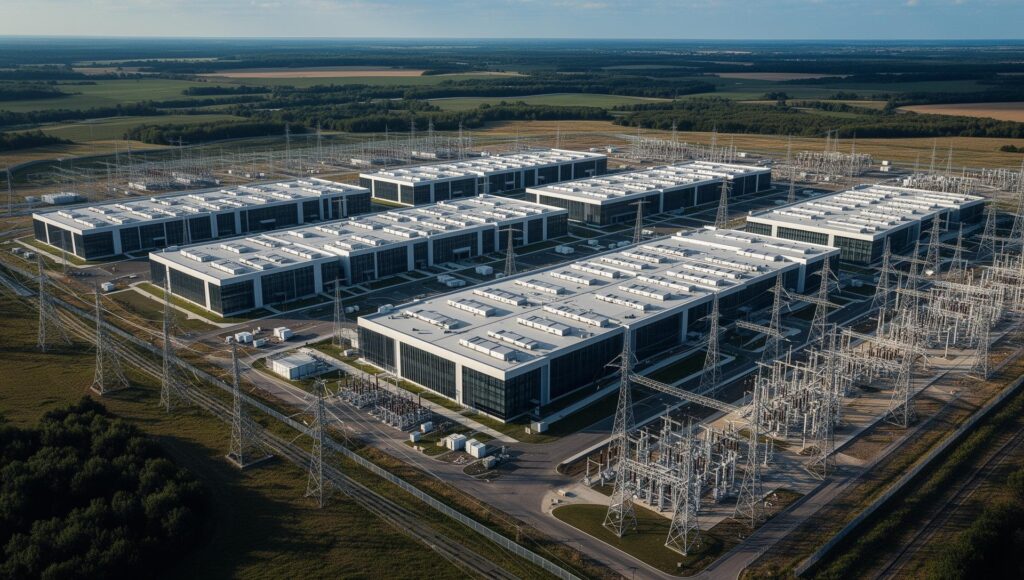
Data centers have become one of the most sought-after asset classes in private equity. Rising AI-driven demand, long-term contracted cash flows, and scarcity of quality supply have pushed valuations to record levels, and attracted capital from generalist buyout funds, infrastructure funds, and sovereign wealth vehicles that would have passed on the sector five years ago.
For PE firms evaluating data center investments in 2026, the market is rewarding disciplined underwriting and punishing deals done on thesis alone. Here is the framework sophisticated investors are using to separate exceptional assets from the noise.
Market Context: Why Data Centers Command Premium Valuations
The structural tailwinds driving data center demand are real and durable. U.S. data center capacity stands at approximately 45 GW and is growing at roughly 15% annually, one of the fastest growth rates of any real asset category. AI and cloud demand are the dominant demand drivers, but enterprise IT modernization, edge computing, and regulatory data residency requirements are contributing meaningfully to absorption.
The supply side is constrained. Power availability is the binding constraint in most tier-one markets, and new development timelines have extended to 36+ months due to transformer shortages and grid interconnection delays. This supply-demand imbalance has supported strong occupancy rates and given operators meaningful pricing power on new leases.
Against this backdrop, stabilized, high-quality data center assets trade at EBITDA multiples in the mid-to-high teens, and in some cases above 20x for assets with long WALE (weighted average lease expiry), premier markets, and significant power capacity.
Market Sizing and Opportunity Set
Tier-One Markets: Northern Virginia (the world’s largest data center market), Silicon Valley, Chicago, Dallas-Fort Worth, Phoenix, and Atlanta continue to attract the most institutional capital. These markets offer deep tenant ecosystems, strong carrier connectivity, and proven demand, but power scarcity is acute and land costs are high.
Emerging Growth Markets: Columbus (Ohio), Reno, Kansas City, and secondary Southeast markets offer lower barriers to entry, available power, and growing demand from hyperscalers looking to diversify their geographic footprint. For investors with development expertise, these markets offer the strongest risk-adjusted return potential.
Specialized Segments: AI infrastructure, edge deployment networks, and carrier-neutral interconnection facilities represent higher-growth subsegments commanding premium valuations relative to general enterprise colocation.
Key Valuation Metrics and Benchmarks
Power Under Contract (MW): Institutional buyers underwrite data centers on a per-megawatt basis. Critical-IT megawatts under long-term contract are the core value driver. Understand the distinction between installed capacity, contracted capacity, and available capacity, and model each scenario separately.
Power Usage Effectiveness (PUE): PUE measures total facility power consumption divided by IT load power. Lower is better; 1.0 represents theoretical perfection.
- Best-in-class hyperscale: 1.10–1.20
- Strong enterprise colocation: 1.30–1.40
- Industry average: approximately 1.50
- Legacy facilities: 1.60 and above
PUE directly impacts operating costs, sustainability positioning, and tenant attractiveness. Assets with PUE above 1.6 face increasing tenant scrutiny and may require significant capital investment to upgrade.
Utilization Rate: Stabilized assets typically run at 80–90% power utilization. Below 70% may indicate tenant churn risk or oversupply in the submarket. Above 90% signals pricing power but limits near-term growth without capacity expansion.
Weighted Average Lease Expiry (WALE): Data center leases typically run 5–10 years with renewal options. A WALE of 5+ years provides strong underwriting certainty. Heavy near-term lease expirations require careful analysis of tenant retention risk and re-leasing assumptions.
Revenue per Megawatt: Varies significantly by market and product type. Hyperscale wholesale leases in tier-one markets generate $1.5–3.5M per MW annually. Retail colocation can generate $4–8M per MW but with higher customer concentration risk and operating complexity.
What Separates Great Assets from Average Ones
The best data center investments in 2026 share several characteristics that go beyond headline metrics:
Power pipeline and development rights: Assets with secured grid interconnection agreements, permitted development sites, and contracted power delivery schedules are materially more valuable than those dependent on future power availability. Power availability is the critical path for data center development, and the queue for grid connections in most markets is 4–7 years.
Hyperscale and cloud tenant relationships: Facilities with existing leases or preferred-vendor relationships with hyperscalers (AWS, Microsoft Azure, Google Cloud, Meta) benefit from highly creditworthy tenants, long lease terms, and potential for significant capacity expansion.
Cooling infrastructure for AI workloads: Liquid cooling capability is becoming a prerequisite for attracting the highest-value AI tenants. Assets without a credible path to high-density cooling will face increasing tenant selection constraints.
Carrier-neutral interconnection: Facilities positioned as interconnection hubs (with multiple carriers, cloud on-ramps, and Internet Exchange presence) command premium valuations due to the network effects that develop over time.
Operator quality: Management depth, operational track record, and customer retention history are highly correlated with long-term asset performance. In a market with significant development activity, experienced operators are rare and command value.
Due Diligence Priorities for PE Investors
When conducting data center due diligence, prioritize the following:
- Power supply agreements: Verify utility interconnection agreements, capacity rights, and any demand response or curtailment provisions that could affect tenant SLAs.
- Tenant concentration: Assess the revenue contribution of the top 3 tenants. Concentration above 40% in a single tenant warrants careful attention to lease structure and renewal probability.
- Capex requirements: Aging mechanical and electrical infrastructure can require significant ongoing capital investment. Assess remaining useful life of critical systems and build a realistic capex schedule.
- Market competitive dynamics: Analyze new supply under construction within the submarket. Markets with significant speculative development present re-leasing risk at lease expiration.
- Environmental and permitting risk: Understand the facility’s environmental compliance status and any pending regulatory changes affecting power usage or water consumption (particularly relevant in water-stressed western markets).
Accessing Off-Market Inventory
The most attractive data center assets rarely surface through public marketing processes. Operators seeking confidential recapitalizations, portfolio divestitures, or joint-venture development partners engage trusted intermediaries rather than broadly marketing assets.
GO Data Centers provides confidential access to off-market data center inventory for qualified investors and acquirers. For requirements of 5 MW and above, engage our sourcing team under NDA at godatacenters.com.